Halloween costumes and party clothes often come home carrying more than memories. Makeup may have rubbed onto a collar, fake blood may have dried into a sleeve, and a drink spill may be hiding under a jacket. Add chocolate, mud, glitter and the general smell of a busy party, and an ordinary laundry load can quickly become a difficult one.
The good news is that most Halloween clothing can be cleaned successfully with a calm, methodical approach. The most important steps are to check the care label, deal with stains before they set, and avoid heat until you know the mark has gone. Whether you are preparing costumes before a party or restoring them afterwards, the following guide will help you clean Halloween party clothes without damaging them.
Start by checking the fabric care label
Before using water, detergent or stain remover, look inside the garment for its care label. It should tell you whether the item can be machine washed, hand washed, tumble dried or professionally cleaned. It may also show the maximum temperature and whether bleach is suitable.
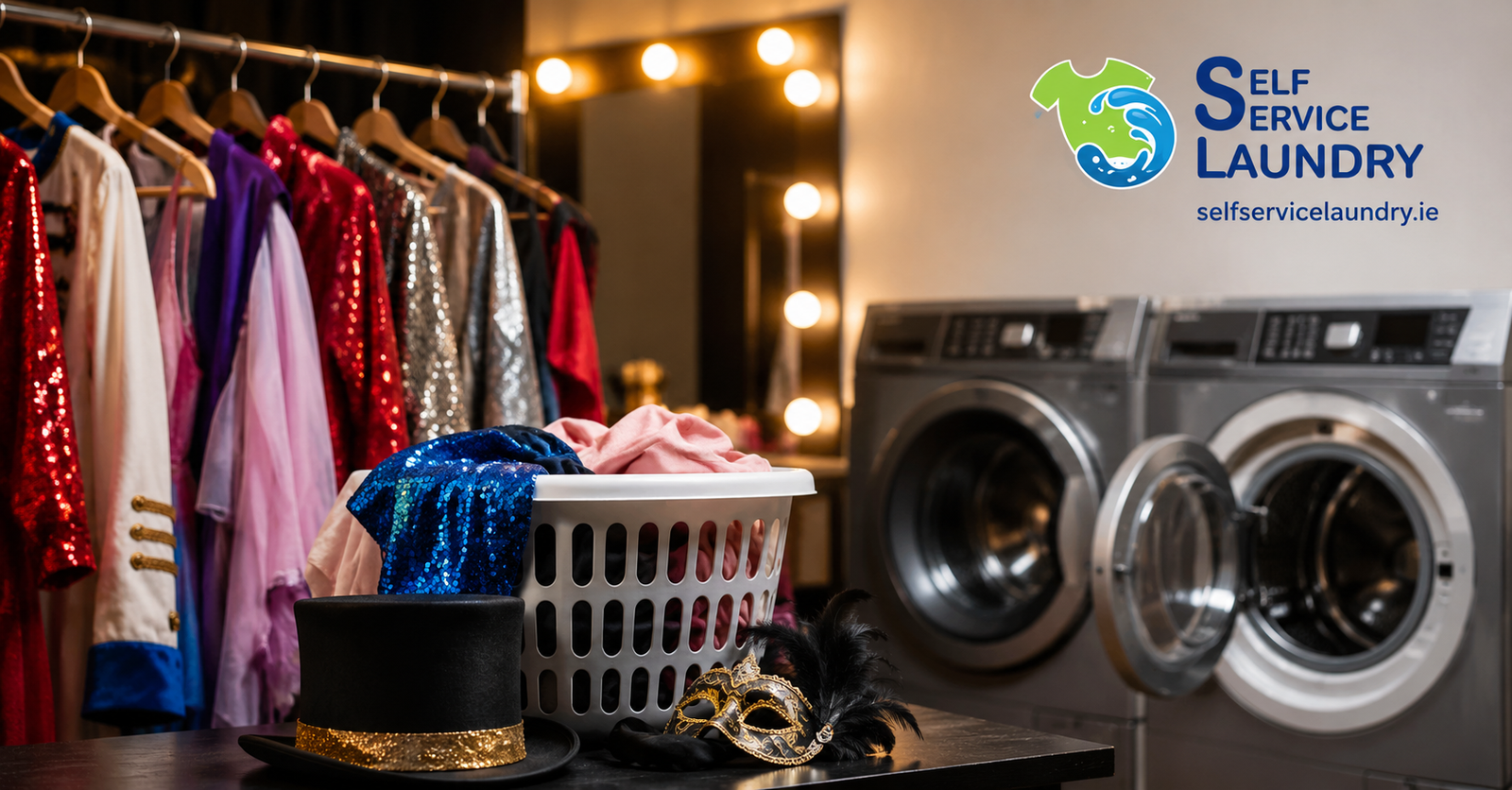
This matters because Halloween outfits are often made from mixed or delicate materials. Sequins, faux leather, tulle, metallic fabric, feathers, glued decorations and printed details may not respond well to a normal hot wash. A costume that looks like a simple dress may contain several materials with different care requirements.
If the label says “dry clean only”, take the item to a professional cleaner and explain what caused the stain. Do not soak it first unless the cleaner advises you to do so. If there is no label, treat the garment cautiously. Test any cleaning product on an inconspicuous area, use cool water and avoid rubbing hard.
It is also worth separating removable accessories before cleaning. Take off belts, badges, capes, detachable wings and loose decorations where possible. Remove anything that could snag another garment or damage a washing machine.
Prepare Halloween clothes before the event
Cleaning before Halloween is useful even when clothes look fresh. New costumes can have a strong packaging smell, while stored outfits may have picked up dust or a stale odour. Washing or airing them before wearing can make them more comfortable, especially for children or anyone with sensitive skin.
For washable clothes, follow the care label and use a gentle cycle if the fabric or decoration is delicate. Turn printed garments and sequined items inside out. Fasten zips and hooks, and place smaller decorated pieces in a mesh laundry bag. Wash dark colours separately the first time because some costume fabrics may release dye.
If the outfit only needs freshening, airing it outside or in a well-ventilated room may be safer than washing it. Keep it away from direct sunlight if the colour could fade. You can also wipe clean, according to the label, any hard accessories such as plastic masks or shoes. Let them dry completely before storing them with fabric items.
Plan for the return journey from the party as well. A washable bag or separate carrier can keep a stained costume away from clean clothing. If possible, place a towel or old cloth beneath children wearing face paint, and avoid applying heavy makeup directly to costume fabric.
Treat stains as soon as you get home
The first rule after a Halloween party is simple: do not leave stained clothes in a closed bag for several days. Open the bag, check every item and allow damp clothing to air. Dried stains can often still be removed, but fresh marks are usually easier to treat.
Remove solid material gently with the edge of a spoon or a blunt knife. Do not scrub immediately, because rubbing can push the stain deeper into the fibres or spread it across a larger area. Blot liquid spills with a clean, absorbent cloth, working from the outside of the mark towards the centre.
Use cold water first for many protein-based or coloured stains. Hot water can make some marks more difficult to remove, especially blood-like products and food stains. Warm water may be suitable later if the care label allows it and the stain treatment instructions recommend it.
How to remove makeup and face-paint stains
Makeup can contain oils, waxes and strong pigments, so it needs gentle treatment. Brush away loose powder without spreading it. For foundation or cream makeup, place a small amount of liquid laundry detergent on the mark and leave it for a few minutes. Blot or gently work it into the fabric, then rinse from the reverse side with cool water.
Avoid using a hot dryer until the stain has disappeared. Heat can set oily makeup into the fabric. If a mark remains after washing, repeat the treatment rather than drying the item immediately.
Face paint varies widely. Water-based paint may lift with cool water and detergent, while grease-based or theatrical paint may need a specialist stain treatment. Always follow the product instructions and test first, especially on a brightly coloured costume. Never mix cleaning products, and avoid bleach unless the garment label and product instructions both permit it.
How to deal with fake blood and red-coloured stains
Fake blood may be water-based, syrup-based or oil-based, so check its ingredients if you know the product used. Scrape away dried residue carefully, then rinse the stain from the back of the fabric with cold water. Apply liquid detergent or a suitable pre-treatment and allow it to work according to the product directions.
Do not start with hot water. Heat may fix some red stains, making them harder to remove. After washing, inspect the garment in good light. If any colour remains, treat it again before using a dryer. For an expensive, vintage or delicate costume, professional cleaning is the safer option.
Removing food, chocolate and drink spills
Food stains should be lifted gently before washing. Scrape off chocolate, icing or other solids, then rinse with cool water. A small amount of liquid detergent can help break down the mark. Oily food may require a pre-treatment designed for grease, but check that it is safe for the fabric.
For drink spills, blot rather than rub. Water, juice and fizzy drinks can leave a sticky residue, while red wine and brightly coloured mixers may leave visible dye. Rinse promptly and use a fabric-safe stain remover if needed. Avoid pouring a large amount of product over a decorated area, as it may affect printed or glued details.
Wash the item at the highest temperature allowed by the care label, not at the highest temperature available. Warm water can help with some washable fabrics, but cold water is the better starting point when the stain contains protein, dye or an unknown substance.
Cleaning mud, outdoor dirt and glitter
Let mud dry before trying to remove it. Brushing wet mud can spread it, while brushing dried mud outdoors or over a bin removes much of the loose soil. Pretreat the remaining mark and wash according to the label.
Glitter needs extra care because it can spread through a whole laundry load. Shake the garment outside, then use a lint roller or sticky tape to lift loose pieces. Wash glitter-covered items separately or inside a mesh bag. Check the drum and seal of the washing machine afterwards, and remove any remaining glitter before washing ordinary clothes.
Do not put loose glitter into a tumble dryer. It may remain inside the drum and transfer to later loads. Decorative materials that are glued rather than sewn may also loosen in water, so hand washing or spot cleaning may be more appropriate.
Removing strong party smells
Smoke, food, sweat and crowded indoor spaces can leave costumes smelling strong even when they are not visibly dirty. Air the garment first. If it is washable, use the normal amount of detergent and avoid adding excessive product, which can leave residue and trap odours.
For suitable fabrics, a cool or warm wash followed by complete drying is usually more effective than simply spraying fragrance onto the outfit. Never mask a smell on a damp garment and put it into storage. If an item remains odorous after washing, check the care label and consider professional cleaning, particularly for lined, padded or structured costumes.
Choosing hand washing, machine washing or a laundry service
Hand washing is a good choice for delicate fabrics, loose decorations, fragile lace and garments marked for gentle treatment. Use a clean basin, cool water and a mild detergent. Press the water through the garment instead of twisting it, then rinse thoroughly.
Machine washing is suitable when the label allows it. Use a gentle cycle, a moderate load and a mesh bag for small or decorated items. Keep heavily stained pieces away from clothes that could be damaged by dye transfer.
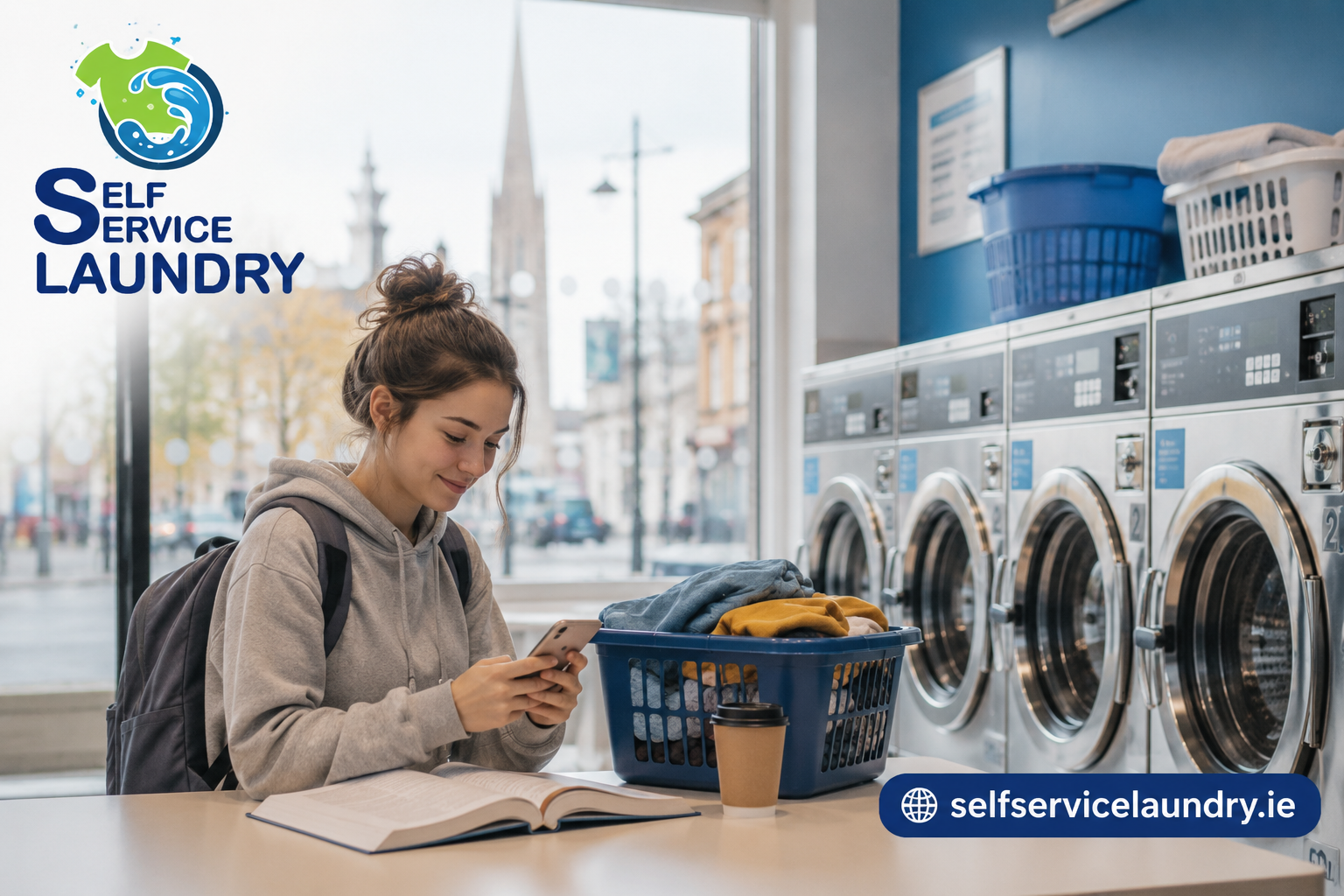
A self service laundry can be useful when Halloween creates more washing than your home machine can comfortably handle. Families may have costumes, towels, bedding, coats and ordinary clothes to wash at the same time. Students, Airbnb guests and people returning from a large party may also need to clean several bulky items without overloading a small domestic machine.
For people looking for a self service laundry Dublin option, Self Service Laundry lists its outlet at Unit 5 Jervis Street, Dublin 1, and describes wash and dry services on its website. The site also states that eco-friendly detergent and softener are included with every wash. Check the current instructions and details before travelling, particularly when bringing delicate or unusually shaped items. A larger machine can help with volume, but it does not replace checking each garment’s care label.
Dry Halloween costumes without causing damage
Drying can damage a costume just as easily as washing it. Do not tumble dry an item unless the label allows it. High heat can shrink fabric, melt synthetic fibres, loosen glue and set any stain that remains.
For hand-washed garments, press out excess water with a towel. Do not wring delicate fabric. Lay knitwear, velvet or heavy decorated pieces flat on a clean, dry towel so they keep their shape. Hang sturdy washable garments on a suitable hanger, but avoid hanging heavy wet costumes because their weight may stretch the shoulders.
Allow clothing to dry fully in a well-ventilated area before putting it away. Keep coloured fabrics out of strong direct sunlight if fading is a concern. If using a dryer in a self service laundry, select only a temperature and cycle permitted by the label. Check the garment before the cycle finishes, and remove it promptly if it is dry.
Store costumes properly after Halloween
Store costumes only when they are clean and completely dry. Fold or hang them according to their shape, and keep accessories in a separate labelled container. Tissue paper can help protect delicate decorations, while a breathable garment bag is preferable to sealing fabric in a damp plastic bag.
Avoid compressing feathers, foam, padded shapes or three-dimensional decorations. Keep costumes in a cool, dry place away from direct sunlight, heaters and strong-smelling products. Before next Halloween, inspect the clothing early enough to repair loose seams or clean any marks that were missed.
FAQs
Should I use hot water on a Halloween costume?
Usually, start with cold water unless the care label says otherwise. Hot water can set some makeup, fake blood and food stains, and it may damage synthetic or decorated materials. Use warm water only when the garment and stain-treatment instructions allow it.
Can I put a sequined costume in the washing machine?
Only if the care label permits machine washing. Turn it inside out, place it in a mesh bag and choose a gentle cycle. Hand washing or professional cleaning may be safer when sequins are loose, glued or attached to fragile fabric.
How do I remove fake blood that has dried?
Scrape away loose residue, rinse from the back with cold water and apply a fabric-safe detergent or pre-treatment. Wash according to the label, then check the stain before drying. Repeat the treatment if necessary.
Is it safe to tumble dry Halloween clothes?
It depends on the care label. Avoid tumble drying delicate, glued, metallic or heat-sensitive items. If a dryer is allowed, choose the lowest suitable temperature and remove the garment as soon as it is dry.
When should I use a professional cleaner?
Use professional cleaning for garments labelled “dry clean only”, expensive or vintage costumes, structured outfits, persistent oily stains and materials you cannot identify. Tell the cleaner what caused the stain and what treatment you have already tried.
Conclusion
To clean Halloween party clothes successfully, act early, read the care label and treat each stain according to its material. Cold water is often the safest starting point, while heat should be avoided until you know the mark has gone. Careful drying and proper storage will help costumes last for future parties. When several bulky items need attention at once, a self service laundry in Dublin can provide a practical place to wash and dry a larger load while you follow the same fabric-care rules.